


Heat Staking
In today’s fast-paced manufacturing landscape, where precision, reliability, and efficiency are non-negotiable, heat staking has emerged as a critical assembly process. From consumer electronics to automotive systems and medical devices, heat staking plays a foundational role in assembling durable, high-performance products at scale.
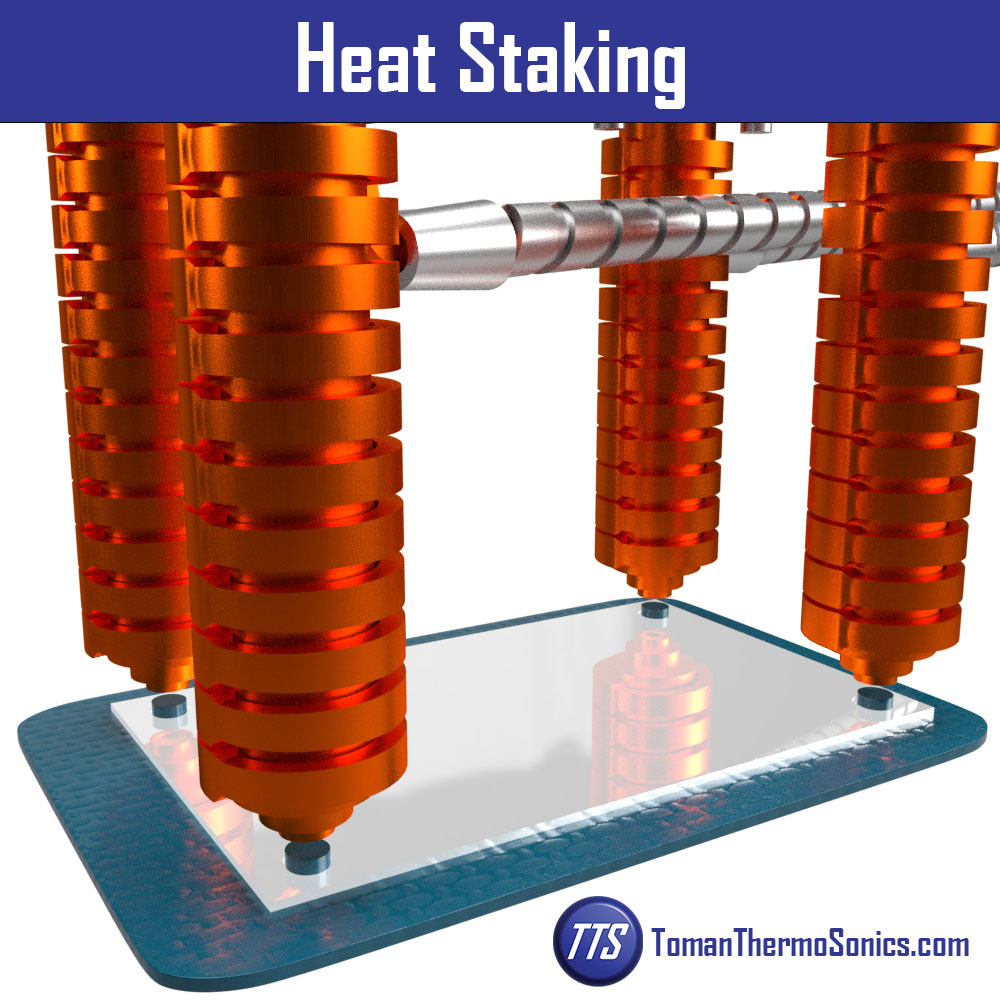
What Is Heat Staking?
Heat staking is a thermal joining process used to mechanically bond two or more components—typically by reforming a thermoplastic part to capture or secure another component, such as a metal insert or secondary plastic piece. By applying controlled heat and pressure, the plastic is softened and reshaped, creating a permanent, clean, and vibration-resistant joint once cooled.
Unlike adhesives or mechanical fasteners, heat staking eliminates the need for additional hardware or curing time, making it an efficient and cost-effective solution for high-volume production.
Why Heat Staking Matters in Modern Technology
1. Precision and Repeatability
As products become smaller and more complex, especially in electronics and medical devices, assembly processes must meet extremely tight tolerances. Heat staking systems offer precise control over parameters such as temperature, dwell time, and pressure—ensuring consistent results across thousands or even millions of cycles.
2. Clean and Aesthetic Assembly
Modern consumers expect sleek, seamless designs. Heat staking produces clean joints without visible screws, adhesives, or surface imperfections. This is especially valuable in industries like consumer electronics, where product appearance directly impacts brand perception.
3. Strength and Durability
Heat-staked joints are highly resistant to vibration, impact, and environmental stress. This makes the process ideal for automotive components, industrial equipment, and any application where long-term reliability is critical.
4. Cost Efficiency
By eliminating secondary components like screws or rivets and reducing labor-intensive assembly steps, heat staking significantly lowers production costs. Automated thermal press systems further enhance throughput, enabling manufacturers to meet growing demand without sacrificing quality.
Key Applications Across Industries
Consumer Electronics
Heat staking is widely used in assembling smartphones, laptops, and wearable devices. It secures internal components such as circuit boards, housings, and connectors while maintaining compact designs.
Automotive Manufacturing
From dashboards to sensor housings, automotive components rely on heat staking for robust, vibration-resistant assemblies. As vehicles incorporate more electronics and lightweight materials, the importance of reliable plastic joining continues to grow.
Medical Devices
In medical applications, precision and cleanliness are paramount. Heat staking provides a controlled, particulate-free joining method, making it ideal for devices such as diagnostic equipment, filters, and disposable medical components.
Appliance and Industrial Equipment
Heat staking ensures durable assembly in products that must withstand repeated use and harsh conditions, such as household appliances and industrial machinery.
Aerospace
Aircraft interiors are filled with engineered thermoplastics used in panels, seating systems, tray tables, and overhead compartments. Heat staking is used to join plastic housings and structural subcomponents, secure brackets, and attach decorative overlays. This eliminates metal fasteners, helping reduce overall aircraft weight—an essential factor in fuel efficiency and operating cost.
Military and Defense
Heat staking plays a critical role in military and defense manufacturing because it provides reliable, vibration-resistant, and tamper-resistant assembly—all essential in harsh operational environments. It’s widely used in ruggedized radios, satellite terminals, control panels, sensor enclosures, military vehicle parts, drone parts, and more. Its importance is even greater in defense systems where failure is not an option.
Advancements Driving the Future
Modern heat staking technology has evolved far beyond basic thermal presses. Today’s systems incorporate:
- Advanced PLC controls for precise parameter management
- Multi-head tooling for simultaneous operations
- Part sensing and quality monitoring to reduce defects
- Automation integration with robotics and Industry 4.0 systems
These advancements allow manufacturers to achieve higher efficiency, better traceability, and improved product consistency.
Heat Staking vs. Alternative Joining Methods
While adhesives, ultrasonic welding, and mechanical fasteners each have their place, heat staking offers a unique balance of advantages:
- Thermal machines cost less
- Thermal tooling usually costs less and lasts longer
- Thermal assembly is very quiet compared to ultrasonic assembly (no mechanical vibration)
- Thermal welds are 20% stronger
- Inserting into filled material can be accomplished with less damage to the inserts with a thermal unit
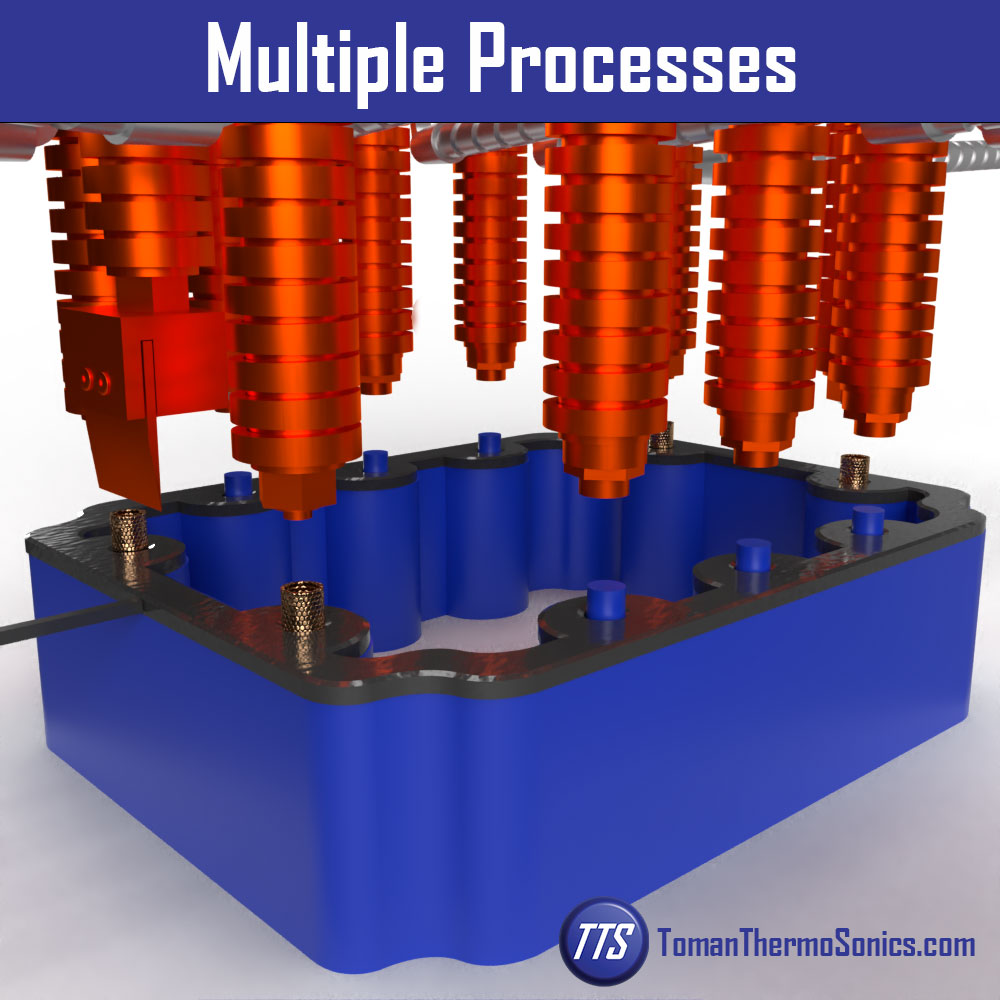
- Multiple stakes and inserts at different levels can be accomplished simultaneously with a thermal unit
- Different sized inserts can be driven simultaneously with a thermal unit
- Larger inserts or more inserts can be driven with one cycle of a thermal press than with an ultrasonic press
- Thermal units work well on glass and mineral-filled resins
- There is less damage or marking on the face of a molded part with a thermal unit
- There is less mechanical force and therefore less stress on the part with a thermal unit
- The thermal staking process is less likely to split the boss or damage other components
- Heat staking provides a clean, corrosion proof, reliable, and vibration-resistant way to secure plastic components without adding metal fasteners or adhesives
- Thermal machines have very low maintenance costs
- Reported to have 10% to 20% stronger holding retention for stakes and inserts
- There are much fewer material limitations with the thermal assembly process
This versatility makes heat staking a preferred solution in applications where both performance and aesthetics matter.
Conclusion
As modern technology continues to push the boundaries of design, miniaturization, and performance, the importance of reliable assembly processes cannot be overstated. Heat staking stands out as a proven, scalable, and highly adaptable solution that meets the demands of today’s most advanced industries.
By combining precision, strength, and efficiency, heat staking is not just a supporting process—it is a key enabler of innovation in modern manufacturing.



